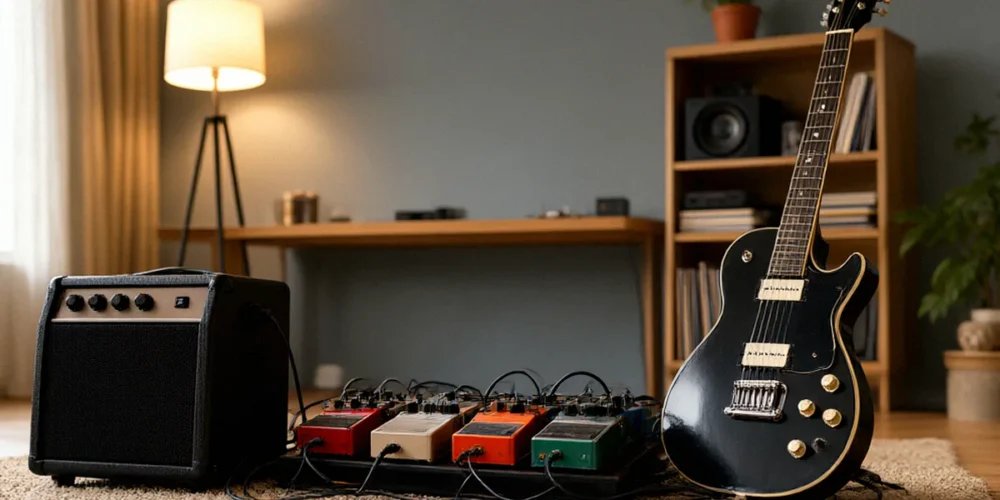
Building a Budget Practice Amp Rig at Home
We know the struggle. You’re in a third-floor apartment in Parkdale or a basement suite in Scarborough, you’ve got a guitar in one hand and a riff in your head, and the last thing you want is a noise complaint taped to your door. Real crushing metal tone feels like it should cost thousands, but it doesn’t have to. Our team has pieced together rigs for under $600 that can handle southern metal sludge, hardcore chugs, and everything in between — without waking the neighbours or draining your bank account. Here’s how we’d build a practice rig that actually sounds like it belongs on stage at the Bovine or Sneaky Dee’s.
Why a Dedicated Practice Rig Beats Plugging Into Your Computer
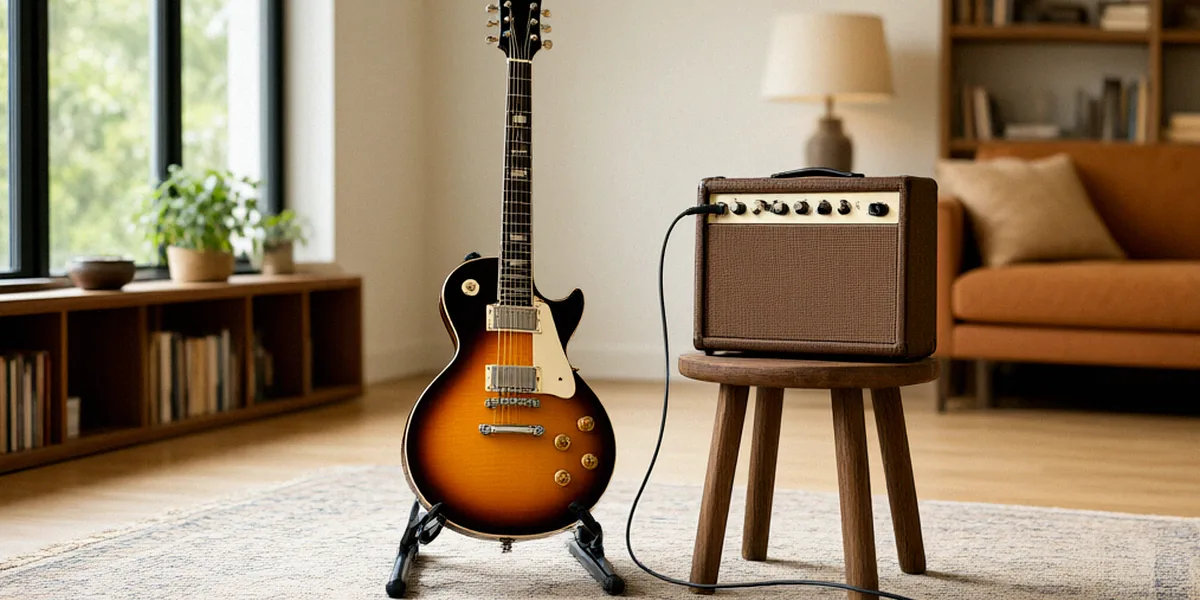
Plugins have gotten genuinely good. Neural DSP, STL Tones, and the free stuff bundled with your DAW can all produce convincing high-gain tones. But there’s a reason we still recommend a real amp for practice, especially if you’re hoping to play live in Toronto’s metal and hardcore scene. Brands like Boss with the Katana series and Blackstar with their ID:Core and HT lines have made it cheap to get a physical amp that responds like an amp should.
Latency and feel: why plugins can hinder your timing
Every plugin chain introduces latency. Even 10 milliseconds of delay between your pick attack and the sound coming out of your monitors is enough to mess with your internal clock. When you’re practicing tremolo picking or tight palm-muted gallops, that disconnect trains your hands to compensate for a delay that won’t exist on stage. A real amp gives you instant feedback — the note happens when you play it, not a blink later.
Building muscle memory for live shows in Toronto
Toronto has a thriving live music scene for metal and hardcore bands, from DIY venues to established rooms like the Opera House and Lee’s Palace. If you’re practicing exclusively through headphones and a laptop, the first time you stand in front of a real cab at stage volume, everything feels foreign. A small combo or head at home lets you develop the picking dynamics, volume knob control, and feedback management you’ll need when you actually plug in at a show.
When software makes sense (and when it doesn’t)
Software is fantastic for silent recording, late-night writing sessions, and experimenting with tones you can’t afford to buy. If you’re tracking demos or learning songs at 2 a.m., a plugin rig is your friend. But for daily practice, timing development, and getting comfortable with how a real amp reacts to your playing, hardware wins.
Choosing the Right Budget Amp Head or Combo
Under $500, you’ve got three broad categories: solid-state, small tube amps, and modeling combos. Each has trade-offs, and the right pick depends on whether you want portability, tube warmth, or versatility.
Solid-state workhorses: Peavey, Boss, and Quilter
Solid-state amps have come a long way. The Boss Katana 50 and 100 are the default recommendation for a reason — they’re loud, reliable, and have onboard effects that cover most genres. Quilter makes compact, gig-ready solid-state heads that weigh almost nothing. And if you find an old Peavey Bandit or Studio Pro used, grab it — those things are indestructible and take pedals beautifully.
Small tube amps: Orange, Blackstar, and EVH
This is where things get fun for southern metal and hardcore. The Peavey 6505 MH is a 20-watt mini head that delivers the same 5150-style aggression as its bigger siblings, with a built-in attenuator so you can crank it at home. The Orange Micro Dark is a hybrid tube/solid-state head with a shape control that scoops or boosts mids — perfect for dialing in that sludgy southern tone. Blackstar’s HT-1 and HT-5 combos offer tube tone at bedroom volumes, and EVH’s 5150 III LBX is worth hunting used if you can stretch the budget.
Modeling amps: Line 6 Catalyst and Fender Mustang
If you want one box that does everything, the Line 6 Catalyst and Fender Mustang GTX series are solid picks. They model classic high-gain amps, include effects, and have headphone outs for silent practice. The catch is that they can feel a bit sterile compared to a real tube amp, but for the price and flexibility, they’re hard to beat.
Speakers and Cabs: The Most Overlooked Part of a Budget Rig
Here’s the thing most beginners miss: the speaker in your cab shapes your tone more than the amp does. You can have a $1,500 head running into a cheap 1×12 with a muddy stock speaker and it’ll sound worse than a $300 head into a good cab. Used cabs are everywhere in Canada if you know where to look.
1×12 vs 2×12: size, volume, and portability
A 1×12 is lighter, quieter, and easier to fit in a car or closet. A 2×12 moves more air, sounds bigger, and is the standard for most gigging metal bands. For apartment practice, a 1×12 is usually the smarter choice — you can always add a second cab later.
Speaker swaps: Celestion Vintage 30 and G12T-75
The Celestion Vintage 30 is the go-to speaker for tight, aggressive metal tone — it’s in countless Mesa, Orange, and Marshall cabs. The G12T-75 is darker and scooped, great for thrash and hardcore. If you buy a used cab with a mediocre speaker, swapping in a V30 (around $150 new, less used) can completely transform your rig.
DIY cab builds and used gear hunting in Canada
Kijiji and Facebook Marketplace are popular for used gear deals in Canada, and we’ve scored Marshall 1x12s and Harley Benton cabs for under $200 on both. Harley Benton’s 1×12 and 2×12 cabs are absurdly cheap new from Thomann, even after shipping and duties. If you’re handy, building a pine or plywood cab is a weekend project and a great way to learn how speakers and enclosures interact.
Essential Pedals for Southern Metal and Hardcore Tone
You don’t need a $400 boutique overdrive to get a crushing tone. A few affordable pedals will do more for your sound than any single upgrade.
Overdrive and distortion: boosting your amp’s front end
The Boss SD-1 is the classic budget boost — it tightens low-end, adds midrange bite, and costs under $80 new. The Pro Co RAT is the other essential: it’ll take a clean-ish amp into full distortion territory and works brilliantly for hardcore and sludge. TC Electronic’s Eyemaster is a no-frills metal distortion that nails that scooped, aggressive tone for around $50.
Noise gates and tuners: Boss NS-2 and TC Polytune
High-gain rigs hiss. A noise gate is non-negotiable if you’re running pedals into a dirty amp. The Boss NS-2 is the standard, and the TC Electronic Polytune is fast, accurate, and easy to read on a dark stage.
Delay and reverb: adding atmosphere without mush
For southern metal, a touch of analog-voiced delay (think MXR Carbon Copy or a cheap Donner) adds depth without smearing your riffs. Reverb is trickier at high gain — use it sparingly, or skip it entirely and let the amp’s natural room sound do the work.
Putting It All Together: A Sample $600 Rig
Here’s a complete rig we’d actually gig with, built entirely around used and budget gear.
The shopping list and estimated costs
- Used Peavey ValveKing 20 MH or 6505 MH head — $250–$350
- Harley Benton G112 1×12 cab (or used Marshall) — $150–$200
- Boss SD-1 overdrive — $60–$80
- Boss NS-2 noise gate (used) — $70–$90
- Cables, picks, strings — $30
Total: right around $600 if you shop patiently. Long & McQuade is a major Canadian music retailer with locations in Toronto and across Canada, and their used section is worth checking weekly. Local shops like Capsule Music and 12th Fret also carry used gear and know the local scene.
Setting up your EQ for tight low-end and cutting mids
Start with everything at noon. Cut the bass until your palm mutes stop flubbing out. Boost the mids — yes, mids. Scooped tones sound great alone but disappear in a mix. Presence and treble to taste, but don’t overdo it or you’ll get fizzy.
Volume control: keeping the peace at home
Use an attenuator if your amp has one, or run a low-wattage setting. A 1×12 in a small room is plenty loud at 1–2 on the master. If you’re in an apartment, consider a load box and IR setup for silent playing — more on that below.
Recording and Jamming with Your Budget Rig
Once your rig sounds good in the room, capturing it is the next step.
Mic placement and interface basics
A Shure SM57 placed just off the dust cap of your speaker, angled slightly, is the classic metal recording setup. Pair it with a Focusrite Scarlett 2i2 and you’ve got a studio-quality signal chain for under $300 total.
Using IRs and cab sims for silent recording
If you can’t mic up, a load box (like the Two Notes Captor or a used Rivera RockCrusher) lets you run your amp silently into your interface and use impulse responses. This is how a lot of modern metal records get made, and it’s perfect for apartment life.
Finding jam partners in Toronto and beyond
Toronto has a thriving live music scene for metal and hardcore bands — check Facebook groups like “Toronto Metal Musicians” or post on Reddit’s r/TorontoMusicians. Local shows at venues like the Hard Luck Bar and the Garrison are also great places to meet people. If you’re outside the city, online collaboration through Discord servers and BandLab works surprisingly well.
FAQ
Do I really need a tube amp for southern metal tone?
No. Solid-state amps like the Boss Katana and Quilter heads can absolutely deliver southern metal tones, especially with a good overdrive pedal in front. Tube amps have a certain feel and response that many players prefer, but they’re not mandatory.
What’s the best budget cab for apartment practice?
A 1×12 with a Celestion Vintage 30 or similar speaker is ideal. It’s portable, quiet enough for home use, and loud enough for small gigs. Harley Benton and used Marshall 1x12s are the best value in Canada.
Where should I shop for used gear in Canada?
Kijiji and Facebook Marketplace are the go-to spots for used deals, and Long & McQuade’s used section is reliable for buying with some warranty protection. Local shops often have hidden gems too.
Can I get a usable metal tone for under $500 total?
Yes, if you buy used. A used Peavey ValveKing or 6505 MH paired with a used 1×12 cab and a Boss SD-1 will get you there for around $500–$600.
How do I practice at home without annoying my neighbours?
Use a low-wattage amp setting, an attenuator, or a load box with IRs for silent playing. Headphones through a modeling amp or interface are also great options for late-night practice.
You don’t need a wall of Mesa stacks to get a tone that crushes. A smart used purchase, a decent cab, and one or two key pedals will get you show-ready without blowing your rent money. Shop patiently, check Kijiji and Long & McQuade regularly, and remember — the best rig is the one you actually play.