
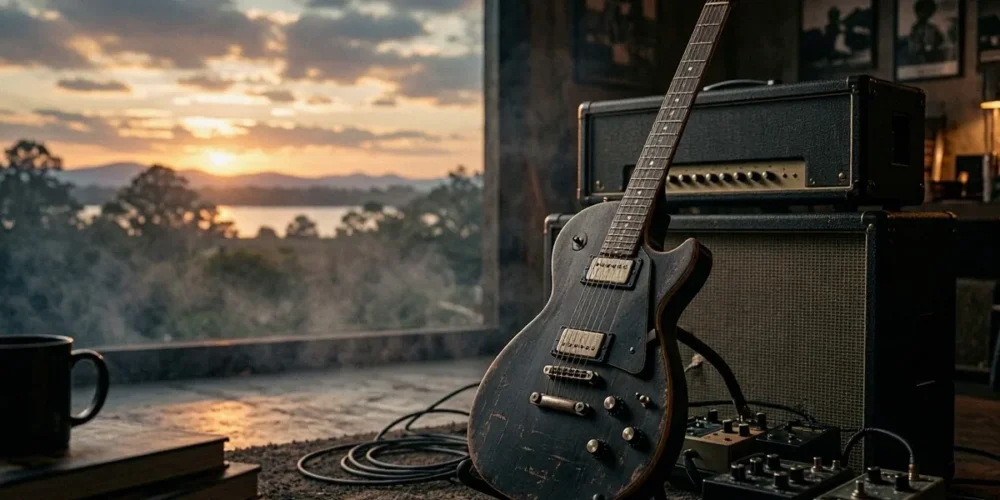
Guitar Tones of Southern Metal: Gear Basics
There’s a guitar tone that hits you in the chest before your brain even registers the riff — thick, sludgy, and drenched in so much saturated gain that single notes feel like chords. That’s the sound of southern metal, and few bands bottled it better than Maylene and the Sons of Disaster. On records like II, their guitars sound like they were tracked through a wall of molasses and broken amplifiers, equal parts Lynyrd Skynyrd swagger and metalcore bite. We’ve spent a lot of hours chasing that tone in our own jam rooms, and this guide breaks down the amps, guitars, pedals, and settings that get you close — with a Canadian angle on where to buy it all without wrecking your wallet.
The Amps That Drive Southern Metal
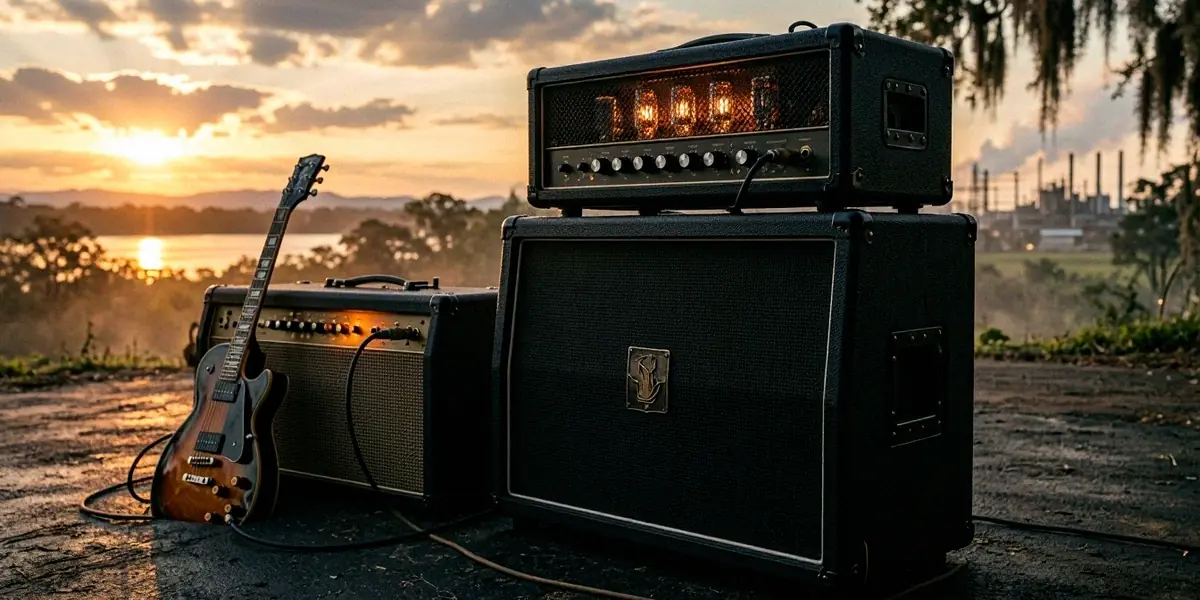
Amplifier choice does more to shape southern metal tone than almost anything else in the chain. The genre lives on high-gain tube amps pushed hard, with enough headroom to stay articulate under drop tunings but enough compression to feel like the speakers are gasping for air. If you’ve ever stood in front of a cranked half-stack at a small venue, you already know the physical weight of that sound.
High-Gain Tube Amps: The Backbone
The Peavey 5150 is practically a genre standard. Its 6L6 power section and aggressive preamp give you that tight, scooped-yet-cutting crunch that works equally well for chugging rhythms and screaming leads. Canada’s own Cancer Bats have leaned on Peavey 5150 amps to build their southern-tinged, hardcore-infused sound, which proves the formula travels north of the border just fine. The Orange Rockerverb is the other pillar — warmer, fuzzier, and a bit more classic-rock in its DNA, which suits the swampier side of southern metal.
British vs. American Voicings
British-voiced amps like Orange, Marshall, and Laney tend to have a midrange bark and a slightly looser low end. American-voiced amps like Peavey, Mesa/Boogie, and Fender-derived designs often sound tighter and more scooped. Southern metal usually splits the difference: you want the British midrange push for cut, but the American tightness for palm-muted riffs. Many players run a British-style head into an American-style cabinet, or vice versa, to blend both characters.
Modern Amp Modelers for Canadian Budgets
Not everyone can drop two grand on a tube head, and that’s fine. Modern modelers and profilers — think Line 6 Helix, Neural DSP plugins, and Boss Katana combos — can get you 85% of the way there for a fraction of the price. For Canadian players on a budget, a Katana 100 or a used Fractal unit paired with a decent cabinet is a legitimately gig-worthy rig. The key is dialing in a high-gain model and resisting the urge to over-EQ it.
Guitars and Pickups for Heavy Riffs
The guitar itself matters less than the amp, but it still shapes how the tone responds under your fingers. Southern metal players gravitate toward set-neck, mahogany-bodied instruments with humbuckers — the classic recipe for thick, sustaining riff machines.
Humbuckers vs. Single Coils
Humbuckers are the default for a reason: they’re hotter, fatter, and quieter under high gain. A Gibson Les Paul or ESP Eclipse with a pair of hot PAF-style or ceramic humbuckers will get you into Maylene territory fast. Single coils can work — especially a P90 for a rawer, garage-rock feel — but you’ll fight hum and thinness at high gain levels. If you love single coils, consider a stacked or noiseless design.
Scale Length and Drop Tunings
Drop C, drop B, and even lower are common in southern metal and metalcore. A 24.75-inch scale (Les Paul-style) feels slinkier but can get flubby in low tunings; a 25.5-inch scale (Strat, Eclipse) stays tighter. Many players use heavier string gauges — .011–.056 or thicker — and sometimes a baritone or 7-string for the lowest riffs. Setup matters: a proper nut slot and intonation adjustment will do more for your tuning stability than any pedal.
Canadian-Made Options: Godin and Beyond
Here’s where Canadian players have a real advantage. Godin guitars, made in Quebec, offer affordable humbucker-equipped models — the Summit, Session, and LG series in particular — that hold up beautifully under heavy gain. They’re built with real wood, real hardware, and none of the import-tax markup you’d pay on a comparable American or Japanese instrument. Beyond Godin, brands like Eastwood and Prestige also build solid workhorse guitars for heavy music at reasonable prices.
Pedals and Effects: Shaping the Sludge
Pedals are where you sculpt the raw amp tone into something with character. Southern metal doesn’t need a massive pedalboard, but a few well-chosen stomps make a huge difference. Long & McQuade, Canada’s biggest music retailer, stocks all of these, so you can try before you buy at most locations.
Overdrive and Boost: Tightening the Tone
An Ibanez Tube Screamer (or a clone like the TS808 or Plumes) is the secret weapon in most high-gain rigs. Set it with the drive low and the level high, and it acts as a clean boost that tightens the low end and pushes the amp’s preamp harder. This is how you get that percussive, palm-muted chug that cuts through a mix.
Fuzz and Distortion: Adding Grit
A Big Muff-style fuzz adds a thick, woolly sustain that’s perfect for sludgy riffs and doom-adjacent passages. Pair it with a slightly dirty amp and you get that wall-of-sound texture. For more aggressive, focused distortion, a Rat or a Boss DS-1 can add bite without overwhelming the amp’s natural character.
Reverb and Delay: Creating Atmosphere
Southern metal isn’t drenched in effects, but a touch of spring reverb or a warm analog delay adds depth, especially on leads and clean passages. A subtle plate reverb on a rhythm track can make a riff feel wider without muddying it. Keep the mix low — you want atmosphere, not wash.
Dialing In the Maylene Sound
Maylene and the Sons of Disaster’s album II is the reference point for most of us chasing this tone. Guitarist Jake Duncan’s rig on that record leaned on Peavey amps and Les Pauls, and the result is thick, sludgy, and surprisingly articulate. Here’s how to get in the neighborhood.
EQ Settings: Mids, Treble, and Bass
Start with the amp’s EQ roughly at noon and adjust from there. Push the mids up — southern metal lives in the midrange, and scooping them too much leaves you lost in the mix. Keep bass moderate; too much and your low riffs turn to mush. Treble around 6 or 7 adds bite without harshness. On a 5150, try bass 5, mids 7, treble 6, presence 5 as a starting point.
Gain Staging: From Clean to Crushing
Don’t max the gain. The trick is stacking gain in stages: a moderately dirty amp, pushed by an overdrive, with a hot humbucker feeding it. This gives you clarity and dynamics that a single dimed gain knob never will. Use your guitar’s volume knob to clean up — roll back to 7 for rhythm, up to 10 for leads.
Layering Rhythm and Lead Tones
For rhythm, aim for a tight, mid-focused tone with the overdrive engaged. For leads, add a touch more gain, a slight delay, and maybe a boost in the upper mids. If you’re recording, double-track your rhythms with slightly different settings — one brighter, one darker — and pan them hard left and right for that wide, crushing wall of sound.
Building Your Rig on a Canadian Budget
You don’t need a stadium budget to sound heavy. Canada has a solid ecosystem of retailers, used markets, and homegrown brands that make southern metal tone accessible.
- Traynor amps — a Canadian brand with a long history, offering budget-friendly tube tones that take pedals well. The YCS and DarkHorse series are worth a look.
- Long & McQuade — the go-to national retailer for amps, pedals, and guitars, with frequent sales and used gear listings.
- Godin guitars — Quebec-built humbucker models at prices that undercut most imports.
- Online marketplaces — Kijiji, Facebook Marketplace, and Reverb Canada are goldmines for used Peavey 5150s and Les Pauls.
New vs. Used: Where to Save
Buy used when you can. Tube amps and guitars hold up well, and the depreciation hit is already taken by the first owner. A used Peavey 5150 head can be found for a fraction of a new one, and used Les Paul Studios are everywhere. Pedals are almost always worth buying used — the Tube Screamer circuit hasn’t changed in decades.
Canadian Retailers and Online Deals
Long & McQuade runs regular promotions and has a robust used section. For online, Reverb Canada filters out cross-border shipping headaches, and many Canadian sellers offer free shipping within provinces. Sign up for newsletters — both L&M and smaller shops like Cosmo Music and Steve’s Music run seasonal sales worth waiting for.
DIY and Modding for Tone Chasers
If you’re handy with a soldering iron, modding is the cheapest path to better tone. Swapping pickups, changing pot values, upgrading capacitors, and building your own overdrive clone from a kit can transform a budget rig. The DIY pedal community is huge, and kits from companies like StewMac and BYOC ship to Canada. It’s also just fun.
FAQ
What amp did Maylene and the Sons of Disaster use?
Guitarist Jake Duncan was known for using Peavey amps, particularly the 5150, paired with Les Paul-style guitars. That combination is a big part of the thick, sludgy tone on II.
Can I get southern metal tone with a solid-state amp?
Yes, though it takes more work. Modern modeling amps like the Boss Katana or Line 6 Catalyst can get surprisingly close, especially with a good overdrive pedal in front. Tube amps still have an edge in feel, but solid-state is absolutely gig-worthy.
What tuning do southern metal bands typically use?
Drop C and drop B are the most common, with some bands going down to drop A or lower. Standard tuning shows up too, especially in the more southern-rock-leaning material.
Where can I buy southern metal gear in Canada?
Long & McQuade is the biggest national option, with locations in most major cities. For used gear, check Kijiji, Facebook Marketplace, and Reverb Canada. Godin guitars and Traynor amps are Canadian-made and widely available.
Do I need a Tube Screamer to sound like Maylene?
It’s not mandatory, but an overdrive pedal used as a clean boost is one of the most effective ways to tighten a high-gain amp for palm-muted riffs. Any transparent overdrive will do the job.
Final Thoughts
Gear gets you in the ballpark, but southern metal tone is as much about attitude and attack as it is about amplifiers and pickups. Maylene and the Sons of Disaster sound the way they do because they play with conviction — hard, loose, and loud. Use this guide as a starting point, then break the rules. Experiment with settings, swap pickups, crank the mids, and make the tone your own. That’s what southern metal has always been about.