Southern Rock Meets Hardcore: How the Sound Evolved
We still remember the first time we dropped the needle on a Maylene and the Sons of Disaster record. The opening riff hit like a bar fight in a swamp — all greasy slide guitar and whiskey-soaked groove — and then Dallas Taylor’s scream tore through it like a busted speaker. That was the moment we understood that southern rock and hardcore weren’t opposites at all. They were long-lost cousins who’d just never been properly introduced. This page is our deep dive into how that collision happened, from the bluesy swagger of the ’70s to the metalcore fury of the 2000s, and why it still rattles our speakers today.
The Roots: Southern Rock and Hardcore Punk
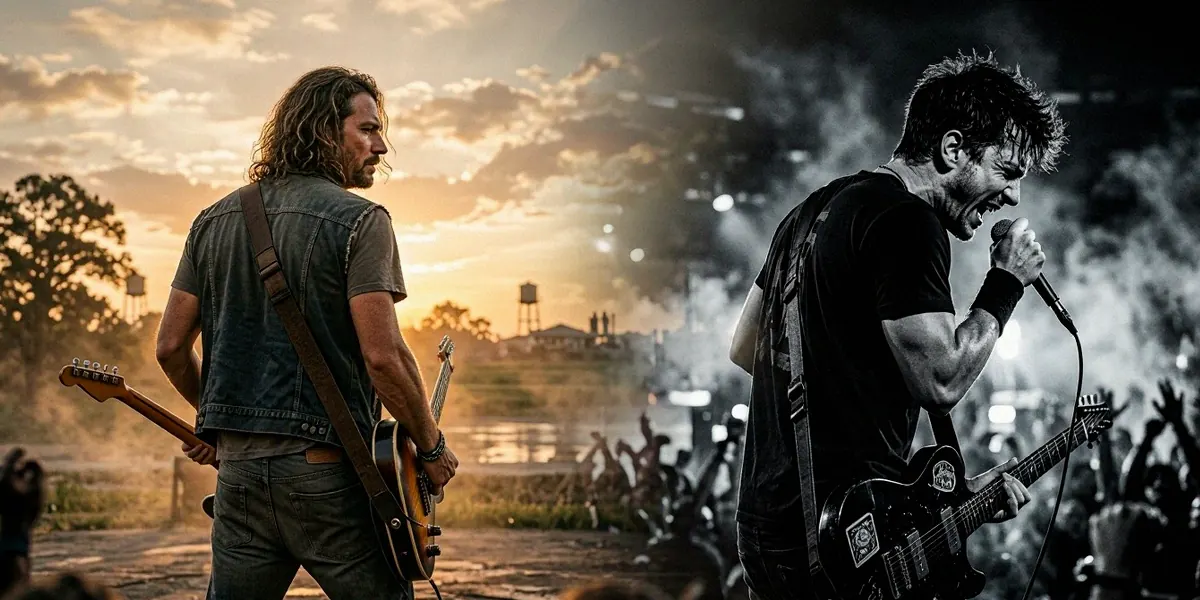
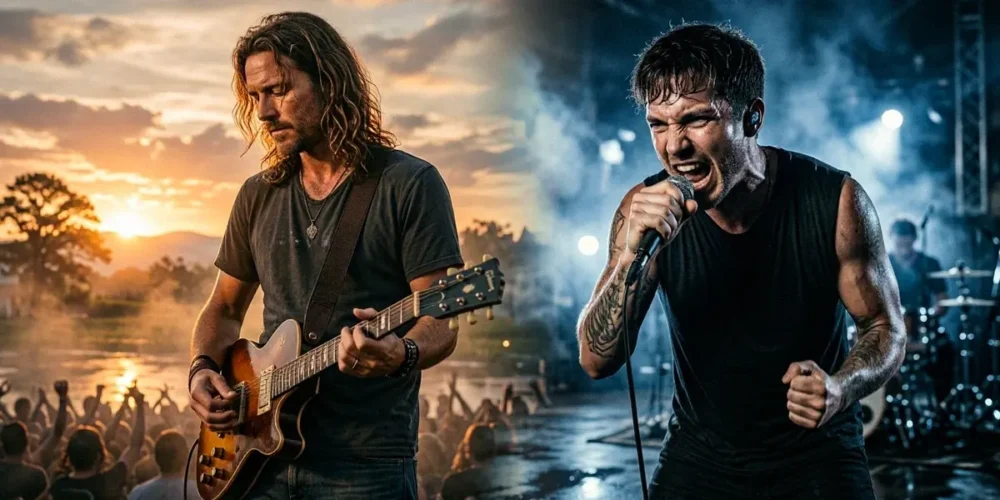
To understand southern metal, you have to understand its two parents. They grew up in different zip codes, ran with different crowds, and yet shared one crucial trait: neither gave a damn about fitting in.
Southern Rock’s Bluesy DNA
Southern rock came out of the late ’60s and ’70s with bands like Lynyrd Skynyrd and the Allman Brothers Band leading the charge. The formula was simple but potent: blues progressions stretched into long, jam-heavy arrangements, twin guitar harmonies trading licks, and a rhythm section that swung rather than stomped. Skynyrd’s “Free Bird” and the Allman Brothers’ “Whipping Post” weren’t just songs — they were sermons. That music carried the humidity of the region in every bent note, and it gave future heavy bands a vocabulary of groove that pure thrash and punk simply didn’t have.
Hardcore’s Raw Intensity
On the other side of the tracks, hardcore punk exploded in the early ’80s with Black Flag and Minor Threat setting the template. Songs were short, fast, and furious. Production values were an afterthought; intensity was everything. Black Flag’s “Rise Above” and Minor Threat’s “Straight Edge” showed that you could say more in ninety seconds than most rock bands managed in six minutes. That DIY ethic and raw aggression became the second half of the southern metal equation — the gasoline poured on the bluesy fire.
The First Collisions: Early Crossover Bands
By the late ’80s and early ’90s, a handful of bands started fusing these worlds without waiting for permission. The results were sludgy, ugly, and absolutely essential.
Corrosion of Conformity’s Groove Shift
Corrosion of Conformity started as a hardcore band out of Raleigh, North Carolina, but their 1994 album Deliverance helped define southern metal as we know it. The record slowed things down, added thick Black Sabbath-style riffing, and let Pepper Keenan’s southern drawl sit right on top of the groove. Tracks like “Albatross” and “Clean My Wounds” proved you could be heavy without being fast, and southern without being nostalgic.
Eyehategod and the NOLA Sludge Scene
Down in New Orleans, Eyehategod took a different route. Their brand of sludge metal was slower, nastier, and more feedback-drenched, but it was unmistakably southern in its swing and its misery. Alongside peers like Crowbar and Acid Bath, they built the NOLA sludge scene that would influence countless bands. The message was clear: the South could do heavy music on its own terms, and it didn’t need to sound like anything coming out of New York or LA.
Maylene and the Sons of Disaster: The Southern Metal Blueprint
If Corrosion of Conformity and Eyehategod laid the foundation, Maylene and the Sons of Disaster poured the concrete. Their self-titled debut dropped in 2005 on Ferret Music, and it landed like a molotov cocktail in a metalcore scene that was starting to sound samey.
Dallas Taylor’s Post-Underoath Vision
Dallas Taylor fronted Underoath before forming Maylene and the Sons of Disaster, and that background mattered. He brought the screaming, the intensity, and the metalcore credibility — but he also brought a fascination with outlaw imagery, southern folklore, and the kind of storytelling you’d find in old Johnny Cash records. The band’s name itself referenced Ma Barker’s gang, and the lyrics leaned into that criminal mythology. It was a persona, sure, but it was a fully realized one.
Mixing Metalcore with Southern Rock Riffs
What made Maylene click was the arrangement. The guitars owed as much to Skynyrd as they did to At the Gates. Songs like “Caution: Dangerous Curves Ahead” and “The Day Hell Broke Loose at Sicard Hollow” alternated between chugging breakdowns and greasy southern licks, often within the same thirty seconds. Taylor’s screams sat comfortably next to clean, twangy passages. It shouldn’t have worked. It absolutely did. For a lot of us, this was the gateway — the record that made us realize metalcore and southern rock could share a stage without either one losing its identity.
The 2000s Wave: Metalcore Meets the South
Maylene didn’t start the wave alone. Through the mid-to-late 2000s, a whole crop of bands started injecting southern flavour into heavy music, and audiences ate it up.
He Is Legend’s Southern Gothic Metalcore
He Is Legend, out of Wilmington, North Carolina, brought a swampy, southern gothic sensibility to their brand of metalcore. Albums like I Am Hollywood and Suck Out the Poison leaned into storytelling, atmosphere, and riffs that felt like they’d been dragged through kudzu. They were never as straightforward as Maylene, but that was the point — they proved the fusion could go in stranger directions.
Every Time I Die’s Chaotic Southern Twist
Every Time I Die came from Buffalo, New York, but their sound was soaked in southern rock swagger and punk chaos. Keith Buckley’s lyrics were a whole literary universe, and the band’s riffing had a boozy, bar-band looseness underneath all the math-y time changes. They weren’t a southern metal band on paper, but they were one in spirit.
Canadian Contenders: Cancer Bats and the Toronto Scene
You don’t have to be from below the Mason-Dixon Line to get it. Cancer Bats formed in Toronto in 2004 and blend hardcore with southern rock in a way that feels completely natural. Liam Cormier’s vocals have that raw, ragged edge, and the band’s riffs borrow liberally from the sludge and groove playbook. They’ve toured with everyone from Billy Talent to Metallica, and they’ve carried the southern metal torch proudly north of the border.
Modern Evolution: Southern Metal Today
The subgenre didn’t die when the 2000s metalcore boom faded. It mutated, spread out, and found new audiences in unexpected places.
The Dead South and the New Acoustic Southern Sound
The Dead South hail from Regina, Saskatchewan — not exactly the first place you’d expect to find a band with “south” in the name. But their acoustic-driven, banjo-forward sound draws on the same well of southern storytelling and dark Americana. They won a Juno Award in 2018 for Illusion & Doubt, and their viral hit “In Hell I’ll Be in Good Company” introduced millions of listeners to a version of southern music that didn’t need distortion to hit hard.
Nashville Pussy’s Unapologetic Rock
Nashville Pussy have been flying the flag for sleazy, southern-fried rock ‘n’ roll since the late ’90s. They’re loud, they’re rude, and they’ve never pretended to be anything else. In an era where a lot of heavy music has gotten polished, they remain a reminder that this stuff was always supposed to be a little dangerous.
Streaming’s Role in Southern Metal’s Reach
Streaming has done something remarkable for southern metal: it’s globalized it. A kid in Oslo or Osaka can discover Maylene and the Sons of Disaster on a playlist and be down a rabbit hole of Corrosion of Conformity and Eyehategod within an hour. Regional scenes that used to be geographically locked are now accessible to anyone with a Wi-Fi connection. That’s changed the audience, and it’s starting to change the music too.
Why This Fusion Still Matters
Southern metal matters because it refuses to pick a lane. It’s a reminder that genre boundaries are usually arbitrary, and that the most interesting music happens when people ignore them. You can hear its influence everywhere now — in video game soundtracks that lean on sludge riffs for atmosphere, in Canadian indie rock bands who borrow southern guitar tones, and in the ongoing metalcore revival that keeps pulling from the same well.
Here’s what keeps us coming back:
- The groove — southern metal swings in a way that most heavy music doesn’t bother to.
- The storytelling — outlaw imagery, southern gothic atmosphere, and lyrics that feel lived-in.
- The tension — screams next to slide guitar shouldn’t work, and yet they do, over and over.
- The community — from NOLA sludge to Toronto hardcore, this scene has always been about people showing up for each other.
Whether you came in through Maylene, Corrosion of Conformity, Cancer Bats, or The Dead South, you’re part of the same lineage. And that lineage is still being written.
FAQ
What exactly is southern metal?
Southern metal is a fusion genre that combines the bluesy grooves and southern rock riffs of bands like Lynyrd Skynyrd with the heaviness and aggression of hardcore punk, sludge, and metalcore. It emerged in the late ’80s and ’90s through bands like Corrosion of Conformity and Eyehategod, and it was popularized in the 2000s by acts like Maylene and the Sons of Disaster.
Who are Maylene and the Sons of Disaster?
Maylene and the Sons of Disaster are a southern metal band formed by Dallas Taylor, who previously fronted Underoath. Their self-titled debut dropped in 2005 on Ferret Music and became a defining record for the subgenre, blending metalcore screams with southern rock riffs and outlaw imagery.
Are there Canadian bands in this scene?
Absolutely. Cancer Bats formed in Toronto in 2004 and blend hardcore with southern rock, and The Dead South from Regina, Saskatchewan won a Juno Award in 2018 with their acoustic take on southern sounds. Canada has been quietly contributing to this world for years.
What’s the best starting point for someone new to southern metal?
We’d suggest starting with Maylene and the Sons of Disaster’s 2005 debut, then moving to Corrosion of Conformity’s Deliverance from 1994. From there, branch into Eyehategod for the sludge side and He Is Legend or Every Time I Die for the metalcore side. Cancer Bats are a great next step if you want a Canadian entry point.
Is southern metal still alive today?
Yes — it’s just evolved. Streaming has introduced the genre to global audiences, and bands like The Dead South and Nashville Pussy continue to carry the torch in their own ways. The influence shows up in video game soundtracks, indie rock, and the ongoing metalcore revival.
Southern metal’s whole story is proof that genre boundaries were made to be broken. Two sounds that supposedly had nothing in common — the bluesy swagger of southern rock and the raw fury of hardcore — turned out to be a perfect match, and the bands that chased that collision gave us some of the most vital heavy music of the past three decades. We’d love to hear which band was your gateway. Drop us a line and tell us what record first made you realize the South could get this heavy.